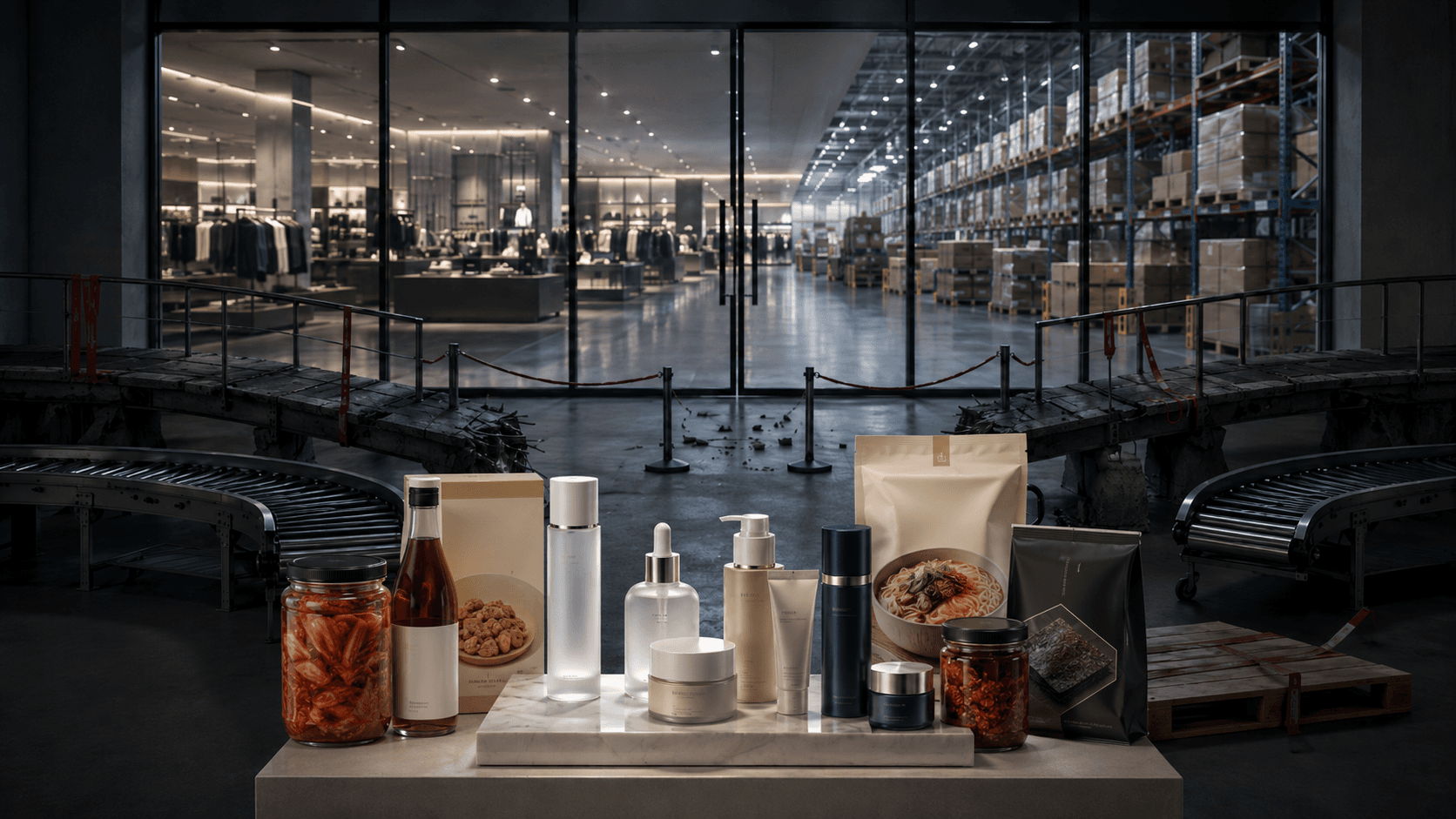
The Infrastructure Gap
Most Korean brands approaching the U.S. market underestimate the complexity of what they're entering. The U.S. is not a single market — it is a fragmented landscape of 50 state regulatory environments, hundreds of distinct retail buyer relationships, and a logistics network that varies dramatically by region, channel, and temperature requirement.
The brands that succeed are rarely the ones with the best products alone. They are the ones whose distribution partners understand this complexity intimately — and have already built the infrastructure to navigate it. Everything else, including product quality, packaging, and marketing, is a multiplier on that foundation. Without the foundation, there is nothing to multiply.
“Distribution is not a commodity. It is destiny. Everything else — product quality, packaging, marketing — is a multiplier on that foundation.”
Regulatory Clearance: The Hidden Timeline
The single most common cause of Korean brand failure in the U.S. is underestimating the regulatory timeline. FDA cosmetic registration, USDA ingredient certification, labeling compliance for both FDA and state-level requirements — each of these has lead times that can range from weeks to months, depending on the product category and the distributor's existing regulatory infrastructure.
Distributors without dedicated regulatory expertise force their brand partners to navigate this independently — a process that typically takes 6 to 12 months longer than it should, consumes management bandwidth, and often results in costly product modifications late in the launch timeline.
KRONE maintains in-house regulatory expertise and established relationships with FDA and USDA approval bodies that allow us to compress this timeline significantly for our brand partners. For one K-Beauty brand we brought to market in 2024, we reduced the regulatory clearance timeline from an industry-average 9 months to 11 weeks.
Retail Relationships: Earned, Not Bought
The second infrastructure pillar is retail relationships. In the Korean distribution context, these are often misunderstood as relationships with large national chains — which are valuable but not sufficient. The brands that build the most durable U.S. positions typically start with regional retail dominance: deep penetration of key markets in cities with high Korean-American populations, specialty Asian grocery chains, and the growing number of mainstream grocery retailers with dedicated international sections.
These relationships take years to build and are not transferable. A Korean brand that arrives in the U.S. without a distributor who already has them is starting from zero — competing against incumbent brands whose distributors have spent a decade cultivating the same buyer relationships they need.
“Retail relationships take years to build and are not transferable. A brand without a distributor who already has them is starting from zero.”
The KRONE Infrastructure Model
When KRONE was founded in 2021, we made a deliberate decision to build infrastructure before scale. Our 30,000 sqft logistics hub in Niles, Illinois — with three-temperature capability across frozen, refrigerated, and dry cold chain — was not a response to demand. It was an investment in the capability that would allow us to serve premium brand partners who would come later.
The same logic applied to our regulatory infrastructure, our retail buyer relationships across the Midwest, and our Amazon and multi-channel e-commerce operations. Each of these capabilities required years of investment before they became competitively differentiated. The brands who partner with us today benefit from that head start.
Choosing the Right Partner
If you represent a Korean brand considering U.S. market entry, the most important question you can ask a prospective distribution partner is not 'How many SKUs do you distribute?' It is 'Show me a brand you brought to market, what the timeline looked like, and what the reorder rate has been.'
Distribution performance is verifiable. Retail relationships are verifiable. Regulatory track records are verifiable. At KRONE, we welcome this scrutiny — it is how we earn the trust of the brand partners we work with, and how we distinguish ourselves from distributors who compete on price rather than capability.